

From Doubt To Clarity
Order your DNA Paternity Test Today!
DNA Paternity Test – Kenya’s Most Affordable DNA Test
Introduction to DNA Paternity Testing in Kenya
DNA Paternity testing is the use of DNA profiles to determine whether an individual is the biological parent of another. It’s the most reliable method of paternity testing, with accuracy typically above 99.99%.
Paternity testing has been on the increase in Kenya, and in this article, we’ll dive into the details of the science behind it.
All human beings (the 7 billion of us), like all life forms, contain the genetic code. The genetic code contains the instructions that define all aspects of the organism. For example, the colour of your eyes, skin, and body build are all determined by our genes.
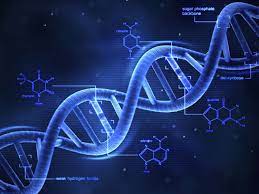
This genetic material is in the form of deoxyribonucleic acid (DNA) and is contained within the cell’s nucleus. All somatic cells in the body have identical DNA. 99.9% of our DNA is identical to one another. It’s the 0.1% difference that we exploit in identity testing, of which paternity testing is part of the sample used depending on the specific circumstances eg postmortem, body remains, routine DNA from the child, mother, and alleged father(s) are extracted, amplified and identified.
Inheritance Of Genetic Material
Half of the genetic material (alleles) is inherited from our mother and the other half comes from the father. During fertilization, the ovum and sperm contribute half of the genetic material that combines in the zygote and develops into a fetus. The 0.1% of unique sequences are transmitted from the parents to their offspring.
Analyzing these unique DNA sequences (called Short Tandem Repeats -STRs) in the mother or father, and comparing them to the child. Depending on the match, we can conclude with a high degree of accuracy whether the child is related to the mother /father. In the case of paternity, the alleged father or father’s DNA is analysed. The highly conserved STR sequences that are identical in both the father and child mean they could only have been inherited from that father.
Example of Paternity Testing
Let’s assume a child has a 10 & 11 allele for a particular genetic loci. The mother is known to possess a 10 and 12. The mother must have contributed the 10 and 11 must be from the father. Any man who does not possess an 11 allele for this particular locus is excluded as a father. For the man not to be ruled out, the likelihood a randomly chosen man might provide the same allele to the child is determined by examining the allelic frequencies from relevant population databases
Obligate Paternal Allele
An obligate paternal allele refers to an allele the actual father must have because it’s in the child and the only parent who would have contributed it is the father.
Compare the child to the mom, The allele the mother doesn’t have is the obligate paternal allele. Increasing the number of loci examined –higher chances of finding unique alleles.
Paternity Index (PI)
PI compares the likelihood that an alleged father passed an allele to the possibility that a randomly selected man of a similar ethnic background could pass the allele to the child.
PI=xy=chance AF could transmit obligate allele, Chance another man of the same race transmitted the allele
X= assigned value of 1 if the alleged father is homozygous for the allele & 0.5 if heterozygous. The larger the ratio, the more likely the man is the biological father.
Based on the distribution of the specific sequences in the population, the probability a random man could have been the father is computed against the alleged father(s). The result is expressed as a percentage and often is above 99.999% when the alleged father is the biological father
Combined Paternity Index
When multiple alleles are tested, a PI is calculated for each. Since alleles are inherited independently, a product of the PIs gives a Combined Paternity Index(CPI). CPI is an odds Ratio indicating how many more times the AF is the biological father than randomly selected unrelated men of similar ethnicity. Most Laboratories in Kenya test up to 15 different loci to increase the accuracy of the paternity testing.
The CPI is therefore a measure of the strength of genetic evidence of paternity.
Interpretation of CPI
Theoretical range of CPI is 0 -∞ (zero to Infinity)
- CPI = 1 – No information
- CPI< 1 Genetic evidence more consistent with non-paternity
- CPI> 1 Genetic evidence supports the assertion that the tested man is the father.
Prior Probability
An assumption is made prior to testing the probability the AF is the true biological father. Prior probability of paternity is the strength of one’s belief the AF is the biological father based on non-genetic evidence. Typically PP= 0.5 is used, assuming it’s a neutral, unbiased value.
Probability of Paternity
This is the measure of the belief in the hypothesis that the man tested is the biological father. The correct probability is based on ALL the evidence of the case, i.e.,
- Non-genetic evidence
- Mothers Testimony
- Tested Man testimony
- Other Witnesses
Genetic evidence comes from DNA testing.
To convert genetic evidence to a probability of paternity, the Bayesian theorem is used. CPI and Prior Probability (PP) are used.
W=(CPI×PP)(CPI ×PP+1-PP)
When the prior probability of 0.5 is used, our probability of paternity becomes:
W=(CPI×0.5)(CPI ×0.5+1-0.5)=CPI(CPI+1)
Effect of Prior Probability
Suppose a defendant presents a powerful testimony e.g. mother is unreliable and has been caught telling lies before or he’s a prominent person and therefore a subject of blackmail. So we take his word for it and reduce the Prior Probability to a figure say 1/500 i.e 0.02
From the formula W= 99.5% at PP= 0.02 and 99.92% if we assume pp=0.5. This leads us to virtually the same verdict, the tested man is probably the biological father.
Put another way, the alleged father may have his say in court BUT it’s unlikely whatever he says will be significant compared to the force of DNA evidence!
Possible Outcomes of DNA Paternity Testing
There are three main outcomes of paternity testing.
Inclusion
The results indicated the tested man could be the child’s father. This is when the value of W above is 99% and above. In a typical result, this will indicate the results are conclusive the tested man is the father.
Exclusion
The results concluded the tested man could not possibly be the child’s father. The results are typically W value of zero.
Indeterminate
Results from genetic testing were inconclusive and could not determine if the tested man is the biological father. This occurs when the probability of paternity falls below >0% and 99%. In such cases, additional testing is required to establish paternity.
Read More: Outcomes of Paternity Testing
Cost of Paternity Testing In Kenya
The cost varies from Kes 27,500 to as much as 50,000. This variation may be accounted for by the type of laboratory, the number of markers tested, and whether the mother is also tested, which affects the final price.
At Labtestzote, we provide DNA testing at affordable and transparent pricing. At Ksh 13,750 per profile, we make it supereasy to know beforehand how much your DNA test will cost. To illustrate, if you have 1 child, those are 2 profiles (Father + 1 Child). The cost in this case is Ksh 27,500 (13,750 *2)
We are committed to making DNA testing accessible to all. That’s why our price for a DNA test is the most competitive in the market.
OFFER: Check out our Special offer on Our DNA Paternity Test!
Challenges in Paternity Testing.
Despite its accuracy, genetic testing is not perfect. Here are some situations where results may be inconclusive.
- Consanguinity. This is when the two parents are genetically close relatives.
- Identical Twins – This is obvious, that if the alleged fathers are identical twins, they possess identical genetic material, and are therefore impossible to tell them apart.
- Unavailable mother’s genetic profile. If the mother’s DNA was not analysed for whatever reason, it makes it harder to identify the paternal alleles and make the conclusion.
- Random mutations – Extremely rare, though theoretically can complicate analysis.
This brings us to the end of this discussion. I hope this will help you in understanding the process and results of paternity testing.
To help you decide on the best lab for paternity testing within Kenya and beyond, costs, and interpretation of results, get in touch with us for unbiased advice. As always, you can rely on us for top-notch confidentiality. Please leave your comment below or hit me up on our email at [email protected].
DNA paternity Test for legal purposes
If the results of paternity testing are to be used in a legal process, like a paternity lawsuit, the testing process is more stringent
- Consent- All involved parties must consent or if court-mandated, then this documentation has to be produced.
- The chain of custody has to be maintained
- Sample collection must be done in the laboratory by a trained professional – Self-collected samples are not admissible.
- The results have to be notarised by an advocate.
- The results can be disclosed lawfully to other parties e.g lawyers or presented as evidence in a court of law.
Wrap-Up – DNA Paternity Test
We hope this post has provided you with a basic understanding of why, how, and where paternity testing is conducted in Kenya.
If you need this service, be sure to contact us on 0711 902565 for further guidance.
Hungry for More? Check out additional resources on DNA paternity testing in Kenya below
More Articles In The DNA Testing Series

Vital Role Of DNA Maternity Testing In Kenya
From Doubt To ClarityOrder your DNA Maternity Test Today! BooK NOW Introduction To DNA Maternity Testing…

Home DNA Test Sample Collection – Easy Step-by-Step Process
Understanding Samples Used for DNA Paternity Testing. Home DNA Test Sample Collection offers a convenient,…

What Are The Key Differences Between Peace of Mind And Court Ordered DNA Paternity Tests?
Introduction to peace of mind Vs legal DNA Paternity Testing There are 2 scenarios when…

Paternity Test During Pregnancy in East Africa for Peace of Mind and Legal Purposes
A Comprehensive Guide To Prenatal Paternity Testing Questions about biological paternity can arise before…

Understanding the Outcomes of DNA Paternity Tests: 3 Possibilities You Need to Know
BooK NOW Understanding the Outcomes of DNA Paternity Tests When it comes to matters of…
9 Common Reasons For DNA Paternity Tests
From Doubt To ClarityOrder your DNA Paternity Test Today! BooK NOW Paternity testing, also known…

DNA Siblingship Testing In Kenya
From Doubt To ClarityOrder your DNA Siblingship Test Today! BooK NOW Introducing Siblingship Testing This…

Key Qualities Of A Great DNA Testing Service Provider (Why Labtestzote DNA Testing Is A Great Choice!!).
DNA testing is a once-in-a-lifetime undertaking. There’s a lot at stake, and there can be…
DNA Paternity Testing Questions: Your Top 17 Queries Answered
reasons for DNA testing Overview of dna testing home dna sample collection DNA test results…

DNA Self-Samples Collection Guide
Summary of DNA Self-Sample Collection Process Self-collection for DNA mouth samples is a safe, convenient…
Disclaimer
The information provided on this medical blog is for general informational purposes only and should not be considered as a substitute for professional medical advice. Always consult with a qualified healthcare provider before making any healthcare decisions or taking any actions based on the information provided on this blog. The authors and publishers of this blog are not liable for any errors or omissions in the content or for any actions taken based on the information provided.